Sunday, April 11, 2021

Tucson Botanical Garden


When I was in Tucson last weekend, I made a short visit to the Tucson Botanical Garden.  It had been 6 or 7 years since I was last there and a lot had changed.


The garden has added an interesting selection of artistic sculptures that are scattered throughout the grounds.


This very lush garden was centered around a fountain (that agave plant in the center is actually a fountain) with pots of all shapes overflowing with pretty blooms.

I spotted a hummingbird resting in a blooming acacia tree.  It was nice of him to pose for this photo.


The "Cactus Car" was also a new addition.  There were cactus growing from the front, back and inside the car and you can see that even the wheels are covered with plants.  


There was even a little miniature village at one place withs street cars that moved along the tracks.  This was a popular spot with both kids and adults.  Everyone seemed to enjoy it.


Sunday, April 4, 2021

Treasures From Around the Globe


The British Museum in London has a spectacular collection of artifacts from around the globe.  After my post two weeks ago, I dug a little more into my photo archives to come up with some photos of some of the treasures that caught my eye.

The above shot is a close up of some of the detail on this clock to the left.  This isn't just any clock, it's a Monumental Carillon Clock that was created in 1589 by Isaac Habrecht of Strasbourg.  It plays "Our Father" (written by Martin Luther) every hour.  It also has three faces, the 24 hour dial, the quarter hour dial and the lowest one is an annual calendar naming the Saint's days and feasts days.

What an amazing piece of ingenuity and craftsmanship. 


If you found that first clock impressive, take a look at this one.  This is called the Milkmaid & Cow Automaton Clock dating around 1600 and made in Poland.  On this clock, the standing farmer indicates the time with his staff, the cows eyes move back and forth and with a flick of the switch, the milkmaid 'milks' the cow.  Liquid stored in the reservoir actually comes out of the udder.  Pretty ingenious, I'd say.


Getting past the fancy clocks, I stopped to admire this Wedgewood piece called The Pegasus Vase.  It dates to 1786.  This has to be the ultimate Wedgewood piece for any collection.


Moving into a room with much larger specimens, I came face to face with "Hoa Hakananai'a" (roughly translated to stolen or hidden friend).  You probably recognize him as a former resident of Rapa Nui or Easter Island.  He's a very long way from home.

Every time I visit the British Museum, this fellow always draws a large crowd of admirers.  I don't think I've ever seen him without a crowd around his base.


Not far from the fellow above, I found the god Amun represented as ram protecting a figure of King Tahargo.  It's just one of an astounding number of Egyptian statues and artifacts to be found at the British Museum.


The beautiful lady to the right can be found in the great, domed hall at the center of the museum.  She is Thalia, muse of comedy and she is Roman from the 2nd century.  

These fantastic objects are just the tip of the iceberg when it comes to things you can see at the British Museum.  And it's why I return again and again.  


Sunday, March 28, 2021

International Folk Art


Last week I had a post about the wonderful art work that can be found all around the place in Santa Fe New Mexico known as Museum Hill.  That spot is home to four different museums and the Santa Fe Botanical Gardens.  The four museums are: Museum of Spanish Colonial Art, Museum of Indian Arts & Culture. The Wheelwright Museum of the American Indian and the Museum of International Folk Art. This post is about that last one, the Museum of International Fold Art.  I visited that museum the last time I was in Santa Fe and it was the first time I had ever been to it.

It's an amazing museum with huge collections of folk art from all over the world.  It is a much bigger museum that the outside  reflects.


One area of the museum was full of dioramas depicting places all over the world.  And, they were huge dioramas that included buildings, vehicles and people of the era depicted.


This one depicts a village that might have been Santa Fe many years ago.  


It was in this diorama that my friend spotted this little lady taking a photo.  My friend said "look, it's you with your camera".


I pointed out that there were a few other photographers walking around this place along with me.


There were vast amounts of other art forms and displays around the museum.  This woven rug caught my eye because of how the weaver made this perfectly flat rug look like it was bunched up.  That is quite a talent.  

The International Fold Art Museum is just another example of the museums to be found at Museum Hill.  And that doesn't even touch the other wonderful museums located in the heart of Santa Fe.  On my last trip I was only there for four days.  To see it all, one needs to spend a whole week and even then you might not see all the museums and galleries available.

Sunday, March 21, 2021

The View From Museum Hill


I've posted many times about the beauty and art to be found in Santa Fe New Mexico.  If want to see more of those posts, just click the "New Mexico" label at the bottom of this post.  For today I thought I'd concentrate just on what can be seen at Museum Hill without even entering one of the many museums located here.  


The architecture of the buildings on the hill is breathtaking in itself but, the place is full of sculptures in every direction.


This one is by Allan Houser and is called 'He Will Be Home Soon'.  


As you wander between the buildings, you can admire wonderful works of art virtually everywhere you walk.  

This sculpture to the right is by Phillip Mangas Haozous called 'Mothering II'.


Above is one of Melanie Yazzie's whimsical painted steel sculptures.


Here is an abstract sculpture by Tony Lee called 'Element'.  


Looking down at the entrance road, I see another huge sculpture that greets both pedestrians and drivers as they make their way through this labyrinth.


The natural surroundings also provides its own beauty to admire.  The views from up on Museum Hill are fantastic.  And, when nature provides a sky full of puffy clouds, it makes it even better.

Museum Hill is a little way out of the center of Santa Fe.  This link will provide helpful hints for getting there.  It is well worth the effort.


Sunday, March 14, 2021

The British Museum & Sutton Hoo


Two weeks ago, I watched a movie on Netflix called "The Dig" staring Carey Mulligan and Ralph Fiennes. It was a fascinating story about a woman who hired a self-taught archeologist, Basil Brown to excavate burial mounds on her estate in Sutton Hoo in Suffolk England.  When Brown finds evidence of a very important burial site, several accredited archeologists try to push Brown aside to claim the dig.  The woman who owned the property rebuffed them and allowed Brown to continue his work.  The discoveries were magnificent and through a gift to the museum, they now reside in the British Museum.


I highly recommend the movie.  You can read a synopsis of it here.  Or, you can read the book of the same name written by John Preston.  


Seeing that movie inspired me to take a look at my photos taken at the British Museum which is always one of the first places I visit on any trip to London.


Wandering through the British Museum never gets old.  The sheer magnitude of amazing artifacts and historical treasures is staggering.  I always leave the museum with a sense that I've touched a bit of history.  


As I looked at my photos, I was thrilled to find a photo of one of the most significant discoveries at the dig at Sutton Hoo.  The helmet dates to the year 625 and is believed to have belonged to King Raedwald of East Anglia.  

The movie gave me context for the importance of this and the other artifacts found at this site.  Now I want to go back to the British Museum to see them again and take a closer look at all the other pieces in this collection.  


Sunday, March 7, 2021

The Enduring Beauty of Venice


There is a show on Netflix that I watch over and over again.  It's called "Somebody Feed Phil" and the best way to describe it is to say it's like a culinary trip around the world.  It stars Phil Rosenthal who is best known as the creator of the TV show "Everybody Loves Raymond".  I never watched the show but I know that many people loved it.

Each episode of "Somebody Feed Phil" features a different city while Phil tours the area and tries all the local cuisine.  A few nights ago I watched the episode (again) that was filmed in Venice.  That is what inspired me to look through my photos of Venice and post a few more.  


I have quite a collection of photos from this beautiful place.  I spent two days here taking in as much as I could.  I'm sorry to say that I didn't visit any of the restaurants that Phil features but I did find places with very good food.


In Venice, no matter where you look you can find beauty.


Even laundry day looks charming in this city.


Venice is one of those places that is overrun with tourists.  It's a place that literally everyone wants to experience and who can blame them?


But even in tourist season you still find quiet corners to get away from the crowds.  

Venice is one of those places where there is beauty in every direction you look.  


Sunday, February 28, 2021

Taking a Closer Look


For today's post, I'm taking a closer look at some of the art works that were part of an exhibit at the Los Angeles County Museum of Art or LACMA for short.  This particular exhibit contained works that were part of the museum's collection and were all gifted to the museum.  

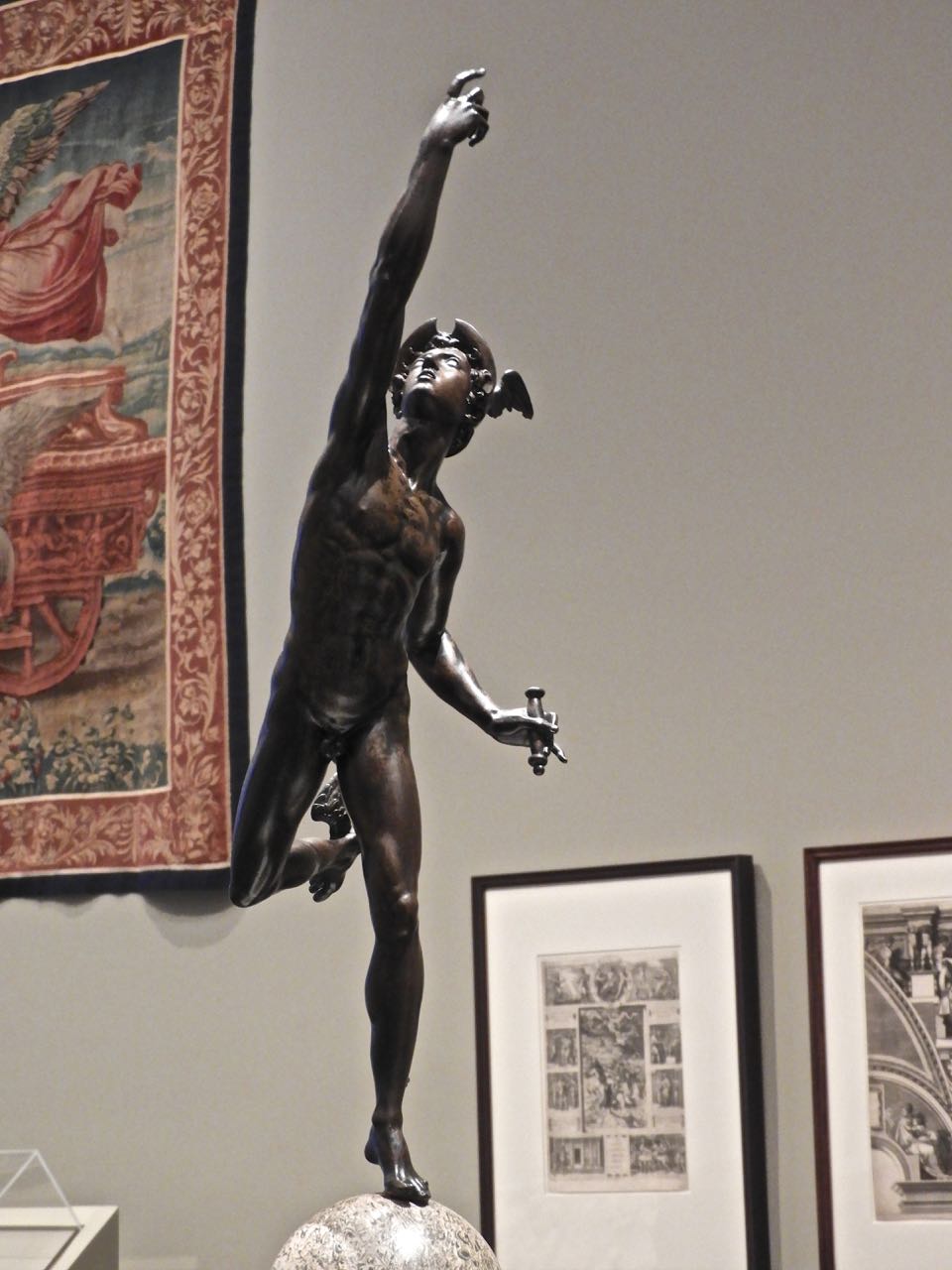
First up is "Flying Mercury", a bronze that dates from around 1580.  


This gorgeous sculpture was given to the museum by Lynda and Stewart Resnick in 2015 as a gift to the museum on its 50th birthday.  

Isn't that a magnificent sculpture?  


Next up is this incredibly beautiful piece called the "Onians Cabinet".  Its origin goes back to Naples Italy around 1600.  It is made from exotic woods with ebony, ivory and steel.  

The details on this piece are beautiful.  It came to the museum from the Estate of Ernest Onians who passed away in 1995.  I was curious about who Onians was so I did a search that led me down a rabbit hole of fascinating information.  He was an art collector from Suffolk in England who was not your usual art connoisseur.  If you are interested, check out this story written by Onians' great niece.  It's a fascinating account of an unusual collector and what happens to his collection after he was gone.  The short account tells a tale of how even expert art appraisers from Sotheby's can miss a a very valuable work of art.


The next piece I examined more closely was this lovely cabinet called the Pietre Dure Cabinet.  Apparently "Pietre Dure" means hard rocks and represents a type of art popular with the Medici family of Florence. Pietre Dure art creates pictures formed from semiprecious stones fitted together so tightly the seams are barely visible to the eye.  This piece contains 19 pictorial panels depicting birds and flowers.


I'm not sure why I didn't take a close up photo of one of those gorgeous panels.  Instead I was attracted to the gold statues at the top of the cabinet.  

These last two pieces in the exhibit appealed to me because of the exquisite beauty of the fabrics and the details of the embroidery work.  These are also the only pieces that my research could find no record of.  I believe they are chasubles but I can't be certain.

I let my camera take a closer look at the impeccable weaving of one of the garments.  You can even see the faces of what look like angels.  

So that concludes my 'closer look' at some great works of art.  I enjoy researching these items as much as I enjoy seeing them in person.  I'm glad I took the photos to remind me to do the research.